Brass stamping parts for sockets & power strips
Terminals, contact inserts, grounding parts, connection plates, pins and bushes — stamped, formed and inspected in Zhongshan, China. H62 and H65 brass as standard, phosphor bronze where a part has to keep its spring.
01 — Terminals
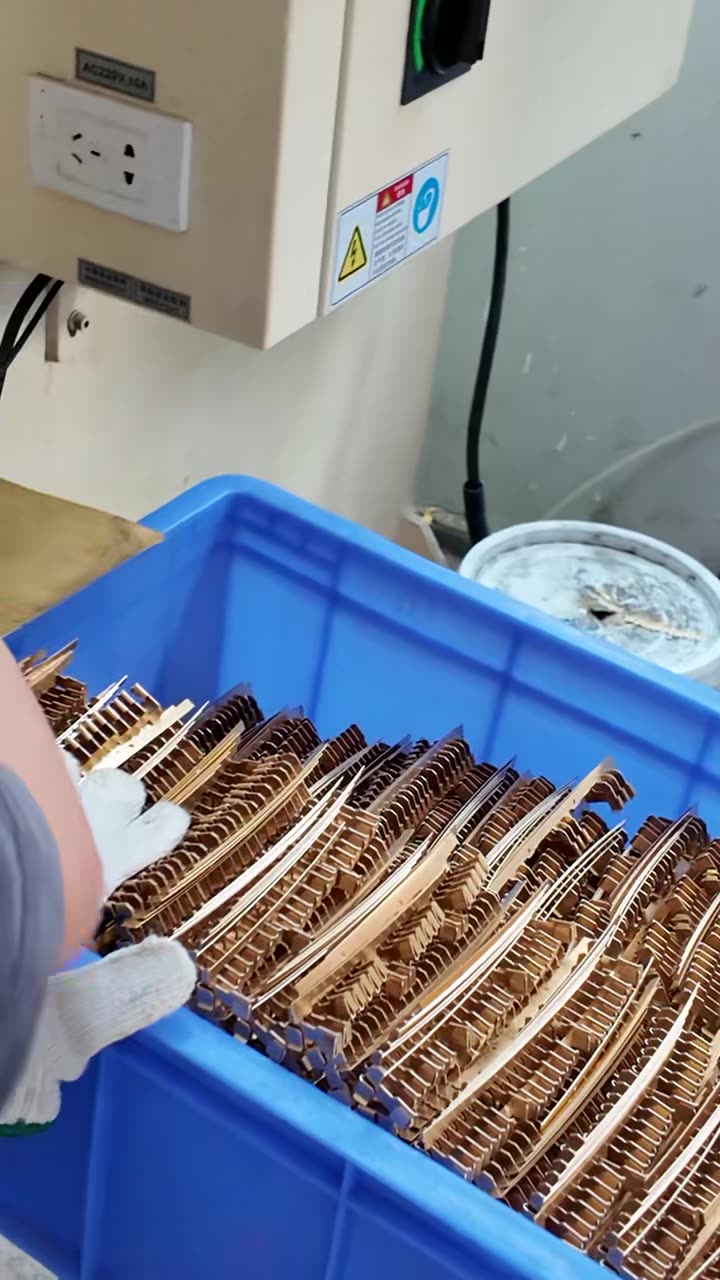
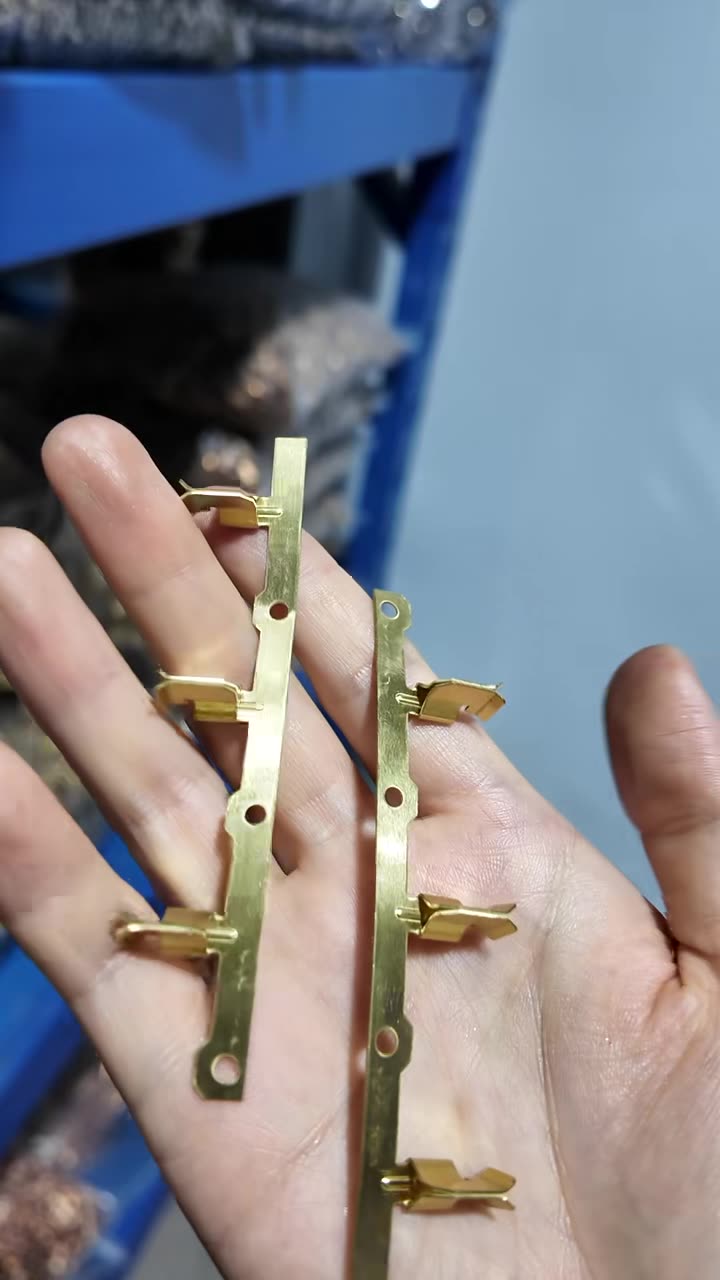
Brass terminals
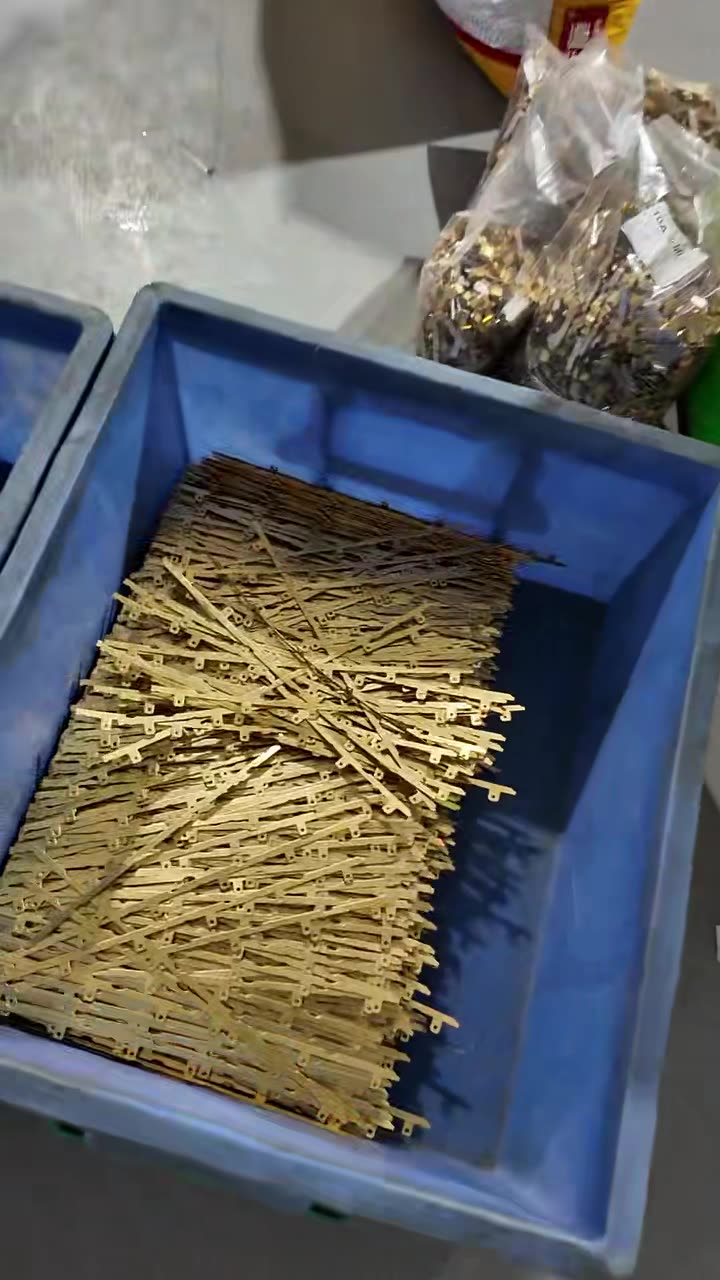
The parts that clamp a wire and carry the current. Stamped and formed from brass strip, supplied loose in bags and cartons or still on the strip where your line feeds them automatically.
- Screw terminals and wire-clamp terminals
- Spade, ring and fork terminals
- Terminal blocks and multi-way connector parts
- Fuse clips and blade contacts
- Earth / grounding terminals
Common material: H62 or H65 brass. Nickel or tin plating where solderability or wear matters. Thickness and tolerance are set from your drawing.
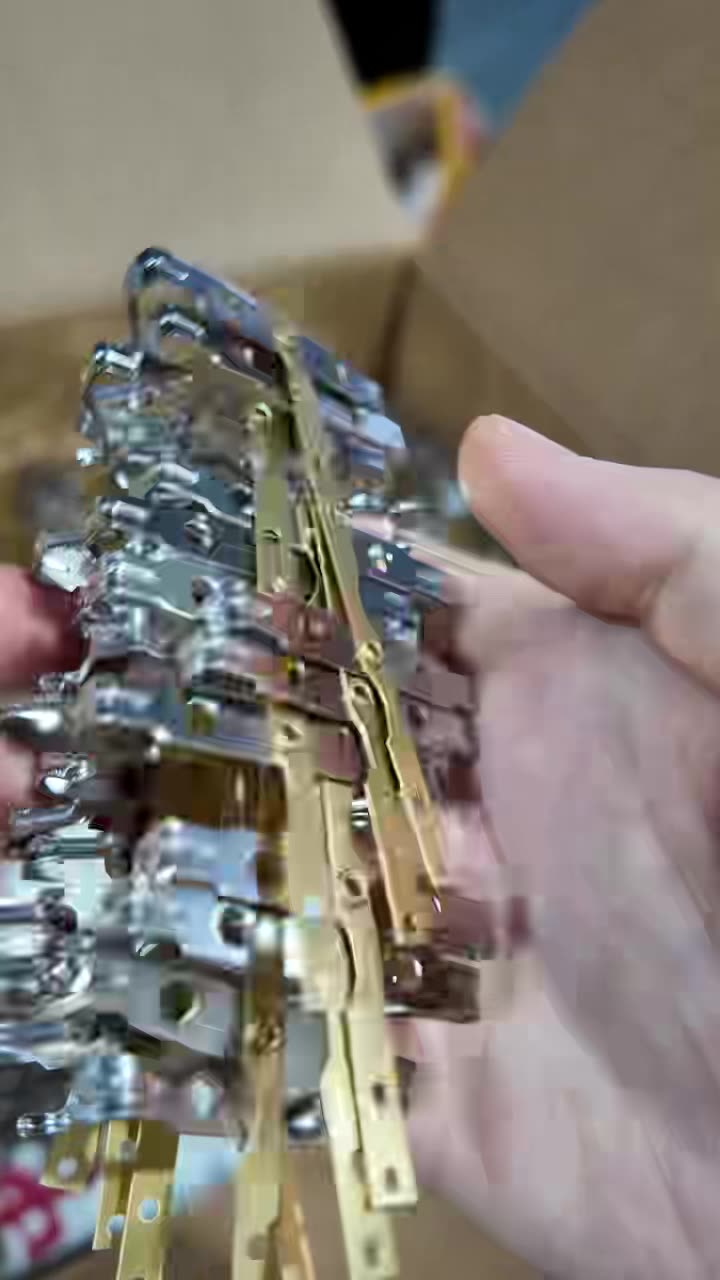
02 — Socket inserts
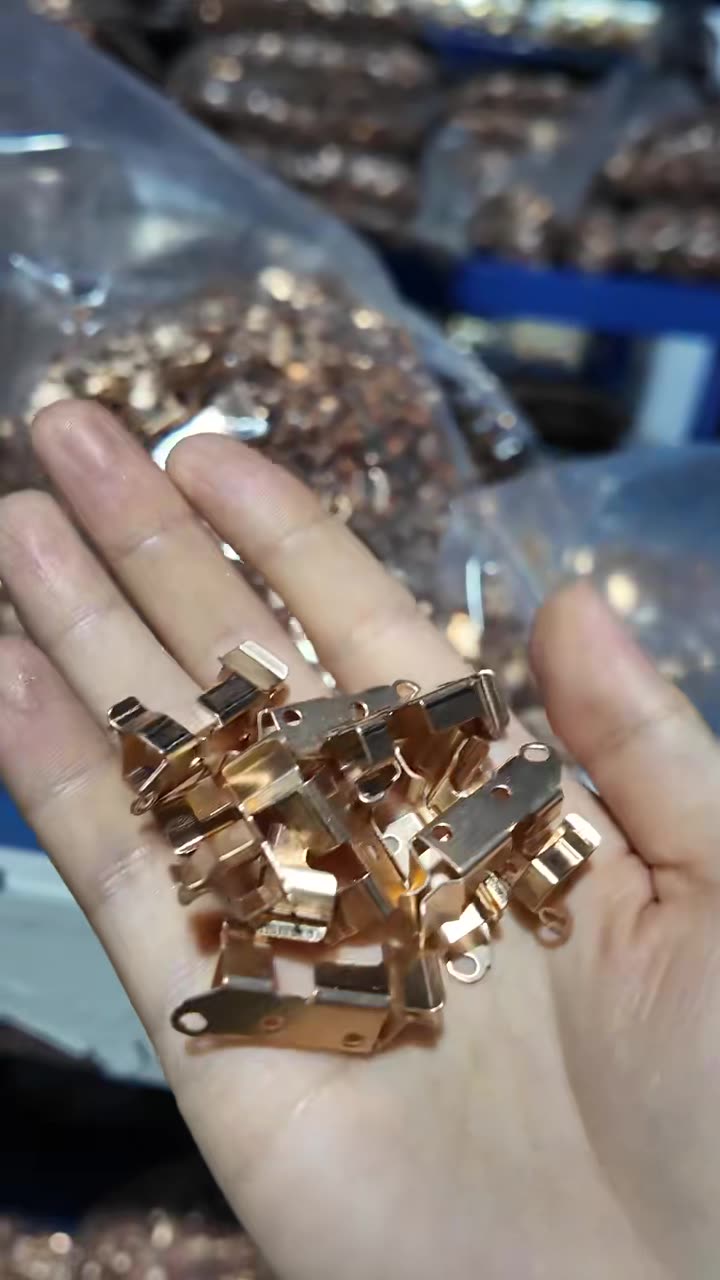
Socket inserts & contacts
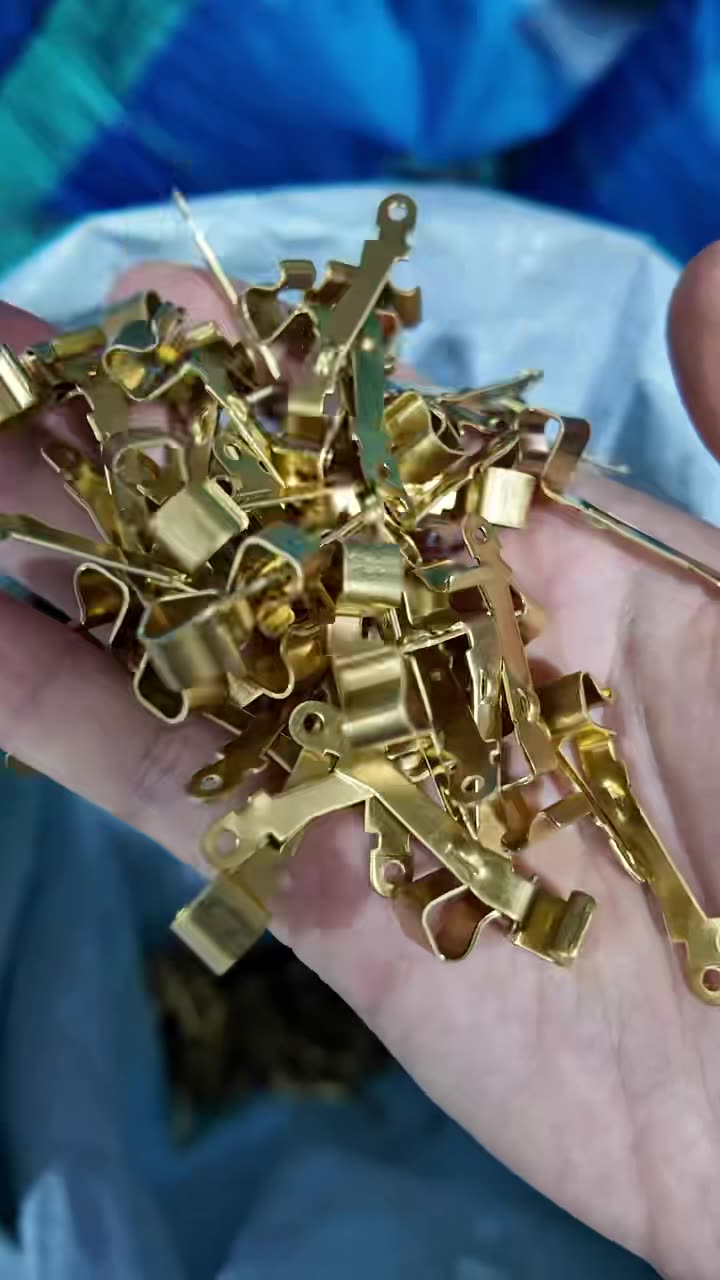
The clips that grip the plug pins. This is the part customers complain about when a socket stops holding — so it is the part where material choice matters most.
- Live, neutral and earth contact clips
- Two-pole and three-pole contact assemblies
- Spring contacts and multi-contact inserts
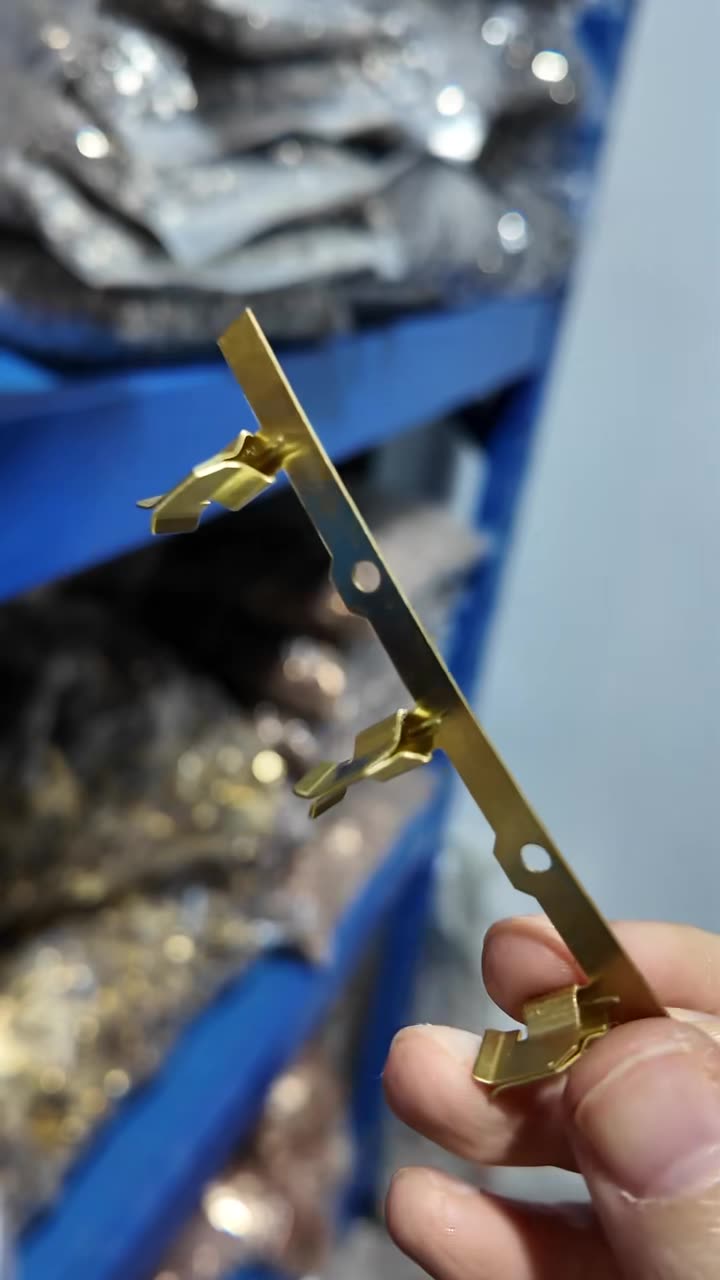
- Contacts joined on strip for automatic insertion
- Shuttered and child-protected socket contacts
Phosphor bronze (C5191 / C5210) is the usual choice here. Higher elastic limit than brass means the contact keeps its grip over thousands of insertions instead of loosening and overheating. Brass is used where the contact is not spring-loaded. We will recommend one or the other on the drawing.
03 — Earthing
Grounding parts
Earth contacts, clips and brackets, in the geometry your socket construction needs — whether the earth is a pin, a side clip or a screw terminal.
- Earth contact clips and side-earthing clips
- Grounding brackets and mounting plates
- Earth terminals and bonding straps
- Assembly parts for metal and plastic socket bodies
Typically H65 brass for corrosion resistance, or phosphor bronze where the earth contact also has to spring. Often supplied as a formed sub-assembly rather than a single stamping.
04 — Plates & busbars
Connection plates & busbars
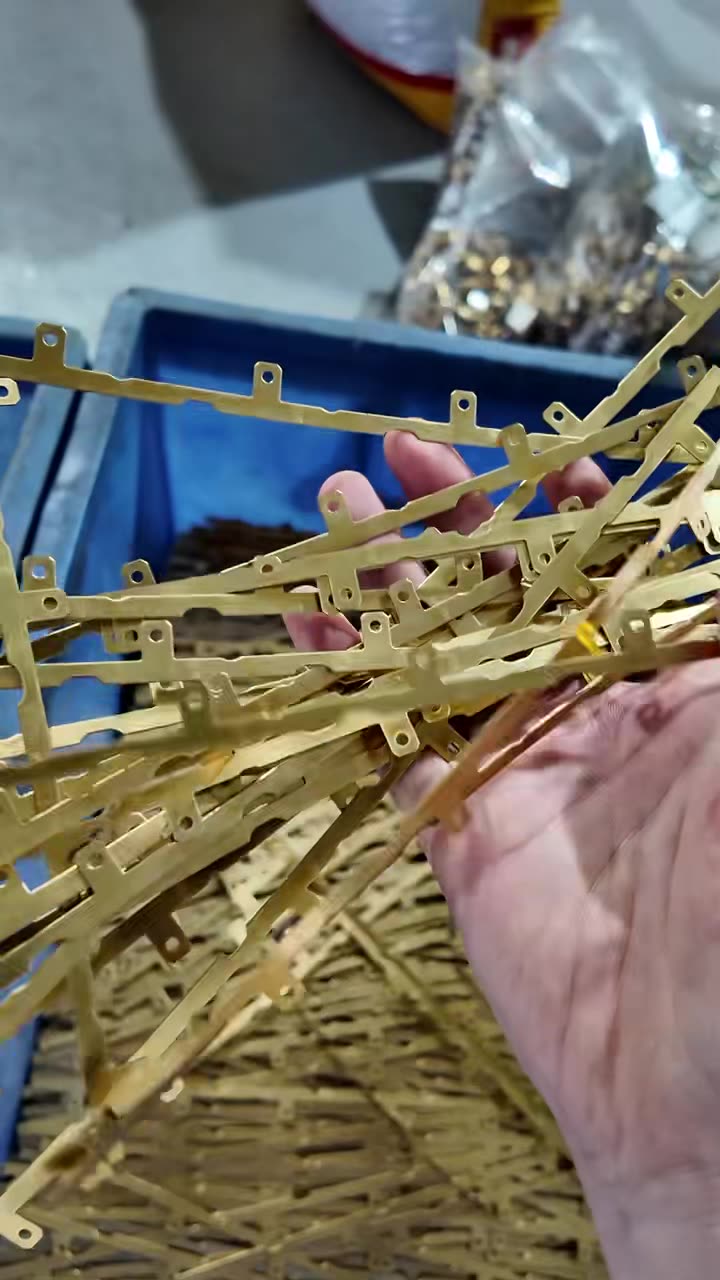
The flat brass that ties poles together and distributes current across a power strip or a multi-gang socket.
- Bridging plates between socket outlets
- Jumper strips and link plates
- Multi-way busbars for power strips
- Switch and indicator connection plates
- Earth busbars
Usually H62 or H65 brass. Dimension and hole position are the critical features here, because a plate that is a fraction out will not line up across a multi-gang assembly — so these are measured and reported per batch.
05 — Pins & bushes
Pins, blades & bushes
Small solid and hollow parts, supplied loose, in strip form, or assembled onto the contact.
- Plug pins and blades in the profile your standard requires
- Hollow rivets and eyelets
- Threaded bushes and inserts
- Knurled and slotted pins
- Rivets for socket sub-assemblies
Material and plating follow the application: conductivity and insertion wear for pins, mechanical strength for rivets and bushes.
06 — Custom
Custom stamped brass parts
If it is a stamped brass part inside a socket, a switch panel, a small appliance or an electrical accessory, it is worth sending us the drawing. You will get a price and an honest answer — if a part is not a good fit for our presses or dies, we will say so rather than take the order and struggle with it.
- 2D or 3D drawing, or a sample photo with a few key dimensions
- Material recommendation based on how the part actually behaves
- Progressive die designed and cut for the part
- First-article sample in about 10 days, with its material report
- Tooling arrangement agreed in writing before the die is cut
Materials
Which brass, and why it matters
Most quality complaints about socket parts trace back to the wrong alloy, not the wrong geometry. These are the four grades we work with, and the reasoning behind each one.
| Grade | Composition | Why it is chosen | Typical use |
|---|---|---|---|
| H62 brass | CuZn38 — about 62% copper | Good conductivity, forms easily, the most economical of the three. The default for high-volume parts where the contact is not spring-loaded. | Terminals, connection plates, general stamped parts |
| H65 brass | CuZn35 — about 65% copper | Higher copper content than H62: better conductivity and better resistance to corrosion and tarnishing, still formable. | Terminals and contacts where conductivity and surface quality matter |
| Phosphor bronze C5191 / C5210 |
Copper with tin and phosphorus | Higher elastic limit and much better resistance to stress relaxation — the contact keeps pressing on the pin instead of taking a set and losing grip. | Socket inserts, spring contacts, earth clips |
| Plated brass nickel / tin |
Any of the above, plated | Better solderability, wear resistance and appearance; tin for solderable joints, nickel for wear and corrosion. | Solder-tab parts, visible contacts, wear surfaces |
Thickness, tolerance and surface finish are quoted per part. Send the drawing and we will confirm the strip thickness the part needs, which dimensions we will measure and report, and the plating arrangement — rather than quote a generic number that will not survive your incoming inspection.
To quote
What we need from you
Send these seven things and you will get a real quote rather than a request for more information.
- Drawing — 2D (PDF / DXF) or 3D (STEP), or a clear photo of the sample with a ruler in frame
- Material — H62, H65, phosphor bronze, or “whatever you recommend”
- Critical dimensions — which features actually matter, and to what tolerance
- Quantity — trial quantity and expected annual volume
- Surface — bare, nickel-plated, tin-plated, or your existing supplier’s finish
- Packing — bagged, boxed, on strip, or a requirement from your line
- Destination — country and port, so we can quote the right Incoterm
Good to know
How ordering works
What is the minimum order?
Depends on the part and whether tooling is already running. For standard items we keep the minimum low and trial orders are welcome. We would rather you test 5,000 pieces in your line than take a large order and discover a problem after it ships.
How is the price calculated?
Per piece, in most cases, with the copper price of the day behind it. Because brass follows the copper market, quotations are confirmed again at each purchase order instead of being locked for a year — and we will always show you the basis rather than move a price quietly.
What are the payment terms?
Usually T/T 30% deposit with the balance against a copy of the bill of lading. FOB Shenzhen or Guangzhou as standard, EXW and CIF on request. Lettered terms can be discussed for larger orders.
Can I get samples?
Yes. For a custom part, the first-article sample comes about 10 days after the drawing is confirmed. For existing items we can send a sample from stock. Sample and courier cost is normally covered by the buyer and credited against the first production order.
How is the order shipped?
Samples and trial quantities by international express. Production orders by LCL for smaller volumes and FCL once they grow — brass is heavy, so sea freight is where the cost is. We are about an hour from Shenzhen and Guangzhou ports.