From drawing to first article: how a custom brass part gets made
Between sending a drawing and holding a sample in your hand there are five stages, and almost every delay in that journey comes from one of three places. Knowing what they are makes the difference between a quote in a day and a fortnight of email.
Stage 1 — The enquiry
The supplier reads your drawing and decides how the part would be made: how many stations the progressive die needs, where the material will be fed from, whether a feature can be formed in one hit or needs a second operation, and whether the part needs an alloy you have not specified.
This is the stage where you get the most value for the least effort, because it is where manufacturability feedback comes from. A radius that is too tight to form cleanly, two holes that could be one slot, a bend direction that causes the part to twist — all of these are cheap to change on a drawing and expensive to change on a die.
What to send
- File: 2D PDF or DXF, or 3D STEP. A native CAD file is welcome but not required.
- Photo: if there is no drawing, a clear photograph of the sample with a ruler in frame, plus two or three measured dimensions — typically overall length, hole position and material thickness.
- Function: what the part does and what happens if it fails. One sentence here is worth several tolerance fractions.
- Critical dimensions: which features must be right, and to what tolerance.
- Quantity: trial quantity and expected annual volume.
- Destination: country, so the Incoterm and packing are quoted correctly.
Stage 2 — Quote and manufacturability note
You should receive more than a price. A useful quotation contains:
- Recommended alloy and temper, with a reason
- Strip thickness and which dimension it controls
- Which dimensions will be measured and reported, and to what tolerance
- Tooling cost, and how it is treated against the first production order
- Minimum order quantity, and the smallest trial quantity that is realistic
- Lead time for the sample and for production
- A unit price band, and the basis for it — including the copper price it references
If the quotation is a single number with no notes, ask for the notes. The absence of a material recommendation is a signal, not a timesaver.
Stage 3 — Tooling
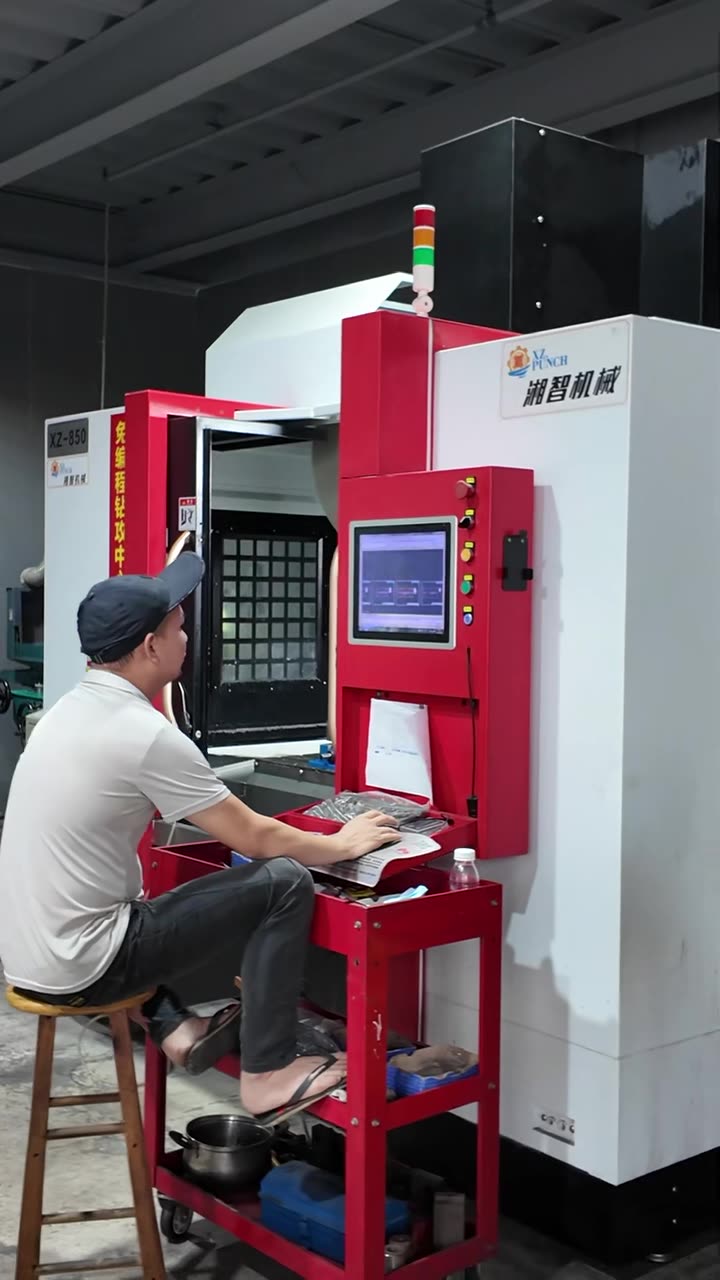
A progressive die is designed, cut and tried. The strip is laid out so that blanking, piercing, forming and bending happen in sequence, with the part attached to a carrier strip until the final station where it is separated. Several parts per stroke are possible depending on the geometry, which is one of the few places where part design directly reduces unit cost.
Tooling is the reason custom parts have minimum quantities and lead times, and it is worth understanding the arithmetic rather than treating it as an arbitrary charge: a die that costs a certain amount has to be paid for across the order volume. That is why a 5,000-piece trial and a 500,000-piece production run do not have the same unit price, and why the tooling arrangement deserves to be agreed in writing before anything is cut.
Stage 4 — First article
The first pieces off the die are pressed, formed, measured against the drawing and sent to you with their material test report. This is not a formality — it is the cheapest opportunity you will ever have to find a problem.
Use the sample properly
- Measure it on your own inspection equipment, not just by eye
- Fit it into the actual socket or assembly it goes into — not into a drawing
- Cycle it if it is a contact: insert and withdraw a plug pins repeatedly and feel whether the grip holds
- Check the burrs where hands or insulation will touch the part
- Confirm the material report against the grade on your drawing
- Check orientation and handling — can your line feed it the way it arrives?
Small die adjustments at this stage are normal and expected. The point of a first article is to absorb those adjustments before mass production, not to prove everything was right the first time.
Stage 5 — Production and shipment
Production runs against the approved sample. In-process checks catch die wear before it affects the whole batch; final inspection measures the agreed critical dimensions and checks burrs, forming and plating. Goods are packed to your requirement, weighed and recorded per carton, photographed before dispatch, and shipped — express for samples, LCL for trial volumes, FCL once the order grows.
The three things that cause most delays
- No critical dimensions called out. The supplier either holds every dimension tightly, which costs money, or guesses which ones matter. Both outcomes are worse than naming them.
- Changes made during tooling. A drawing revision after the die is cut means redesign, recutting and a new first article. This is the single most expensive sentence in the process.
- Specification added late. Plating, packing or a certification requirement introduced after the quote changes the price and sometimes the design. Say it at the enquiry stage and it is routine.
The three expectations that cause the most friction. A fixed price list for a custom stamped part, because a price is a function of geometry, material and the copper market. Free tooling, unless the volume justifies absorbing it. And a price locked for a year with no adjustment — which typically comes back later as a quality problem, because the only way to honour it when copper rises is to take something out of the part.
None of this requires a buyer to become a metallurgist. It requires sending a drawing with the function written on it, and expecting the quote to come back with a reason attached.