From your drawing to a part that fits
This is what most customers actually come for: a stamped brass part that does not exist anywhere yet, made to a drawing, repeatable batch after batch. Here is exactly how that runs — including the parts that are usually kept vague.
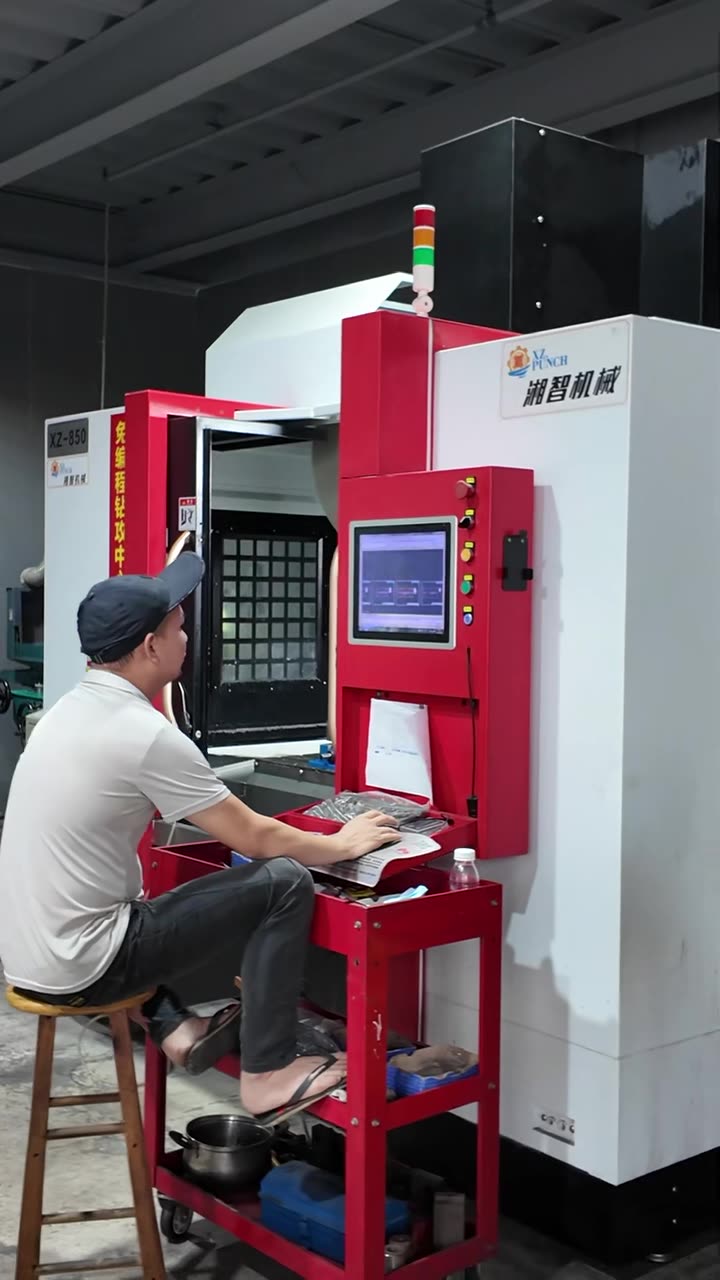
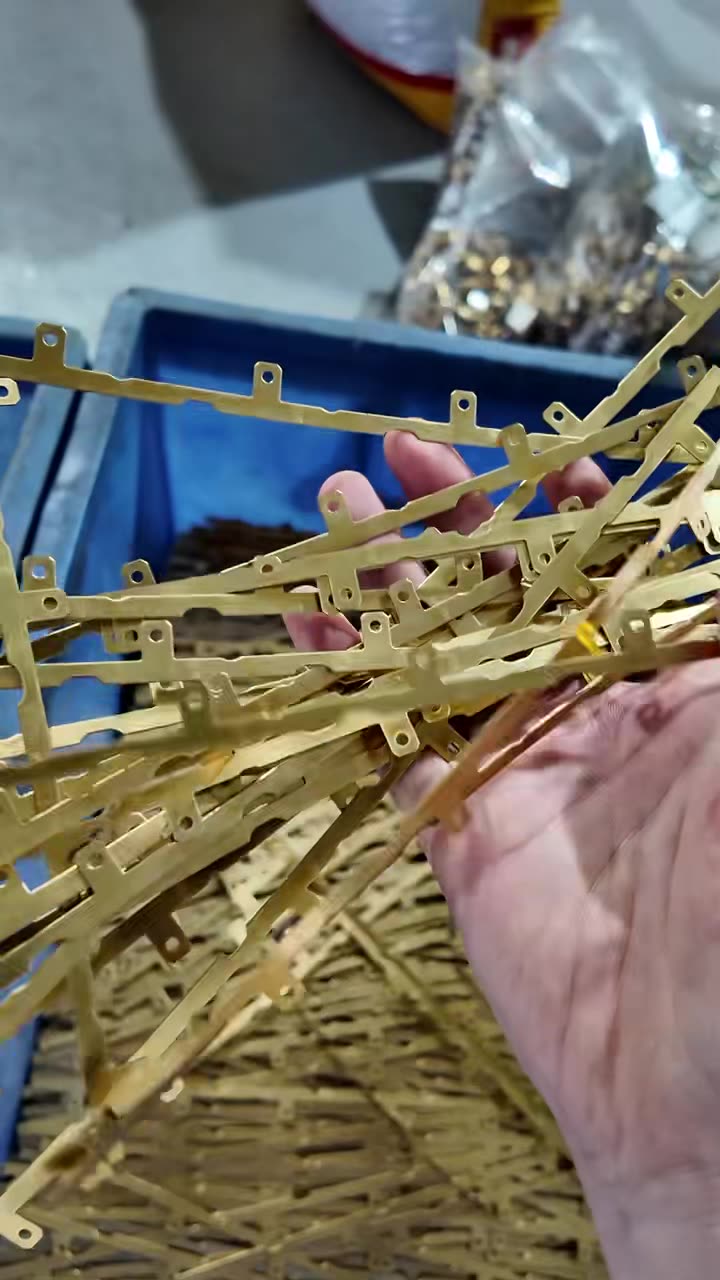
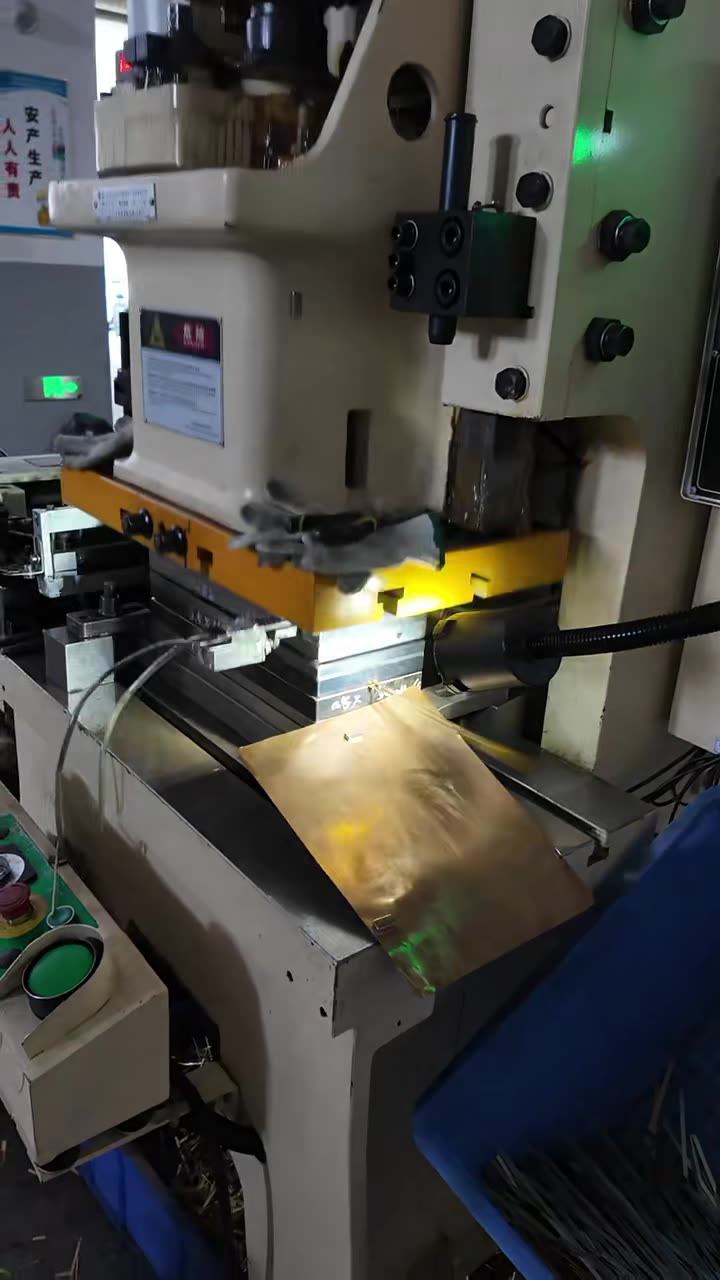
Step by step
Five steps, and what happens at each one
Send the drawing — or a photo with dimensions
2D (PDF, DXF) or 3D (STEP) is ideal, but a clear photograph of the existing part with a ruler in frame and two or three measured dimensions is often enough to quote. Tell us what the part does and which dimensions are critical — that single piece of information is worth more than a hundred-micron tolerance applied to every feature.
Your drawing stays with us. We do not share it, reuse it for another customer, or send it to a third party for tooling. If you need an NDA, we will sign one before you send anything.
Quote and manufacturability note — within 24 hours
You get: the recommended material and why, strip thickness, the dimensions we will measure and report, tooling cost, minimum order, lead time and a unit price band. Alongside it, anything we would change to make the part cheaper or more reliable.
Typical feedback at this stage: a radius that is too tight to form cleanly in one hit; two features that could be combined into one operation; a tolerance that costs real money but does not affect how the part works; or a part that should be phosphor bronze rather than brass because the contact has to spring.
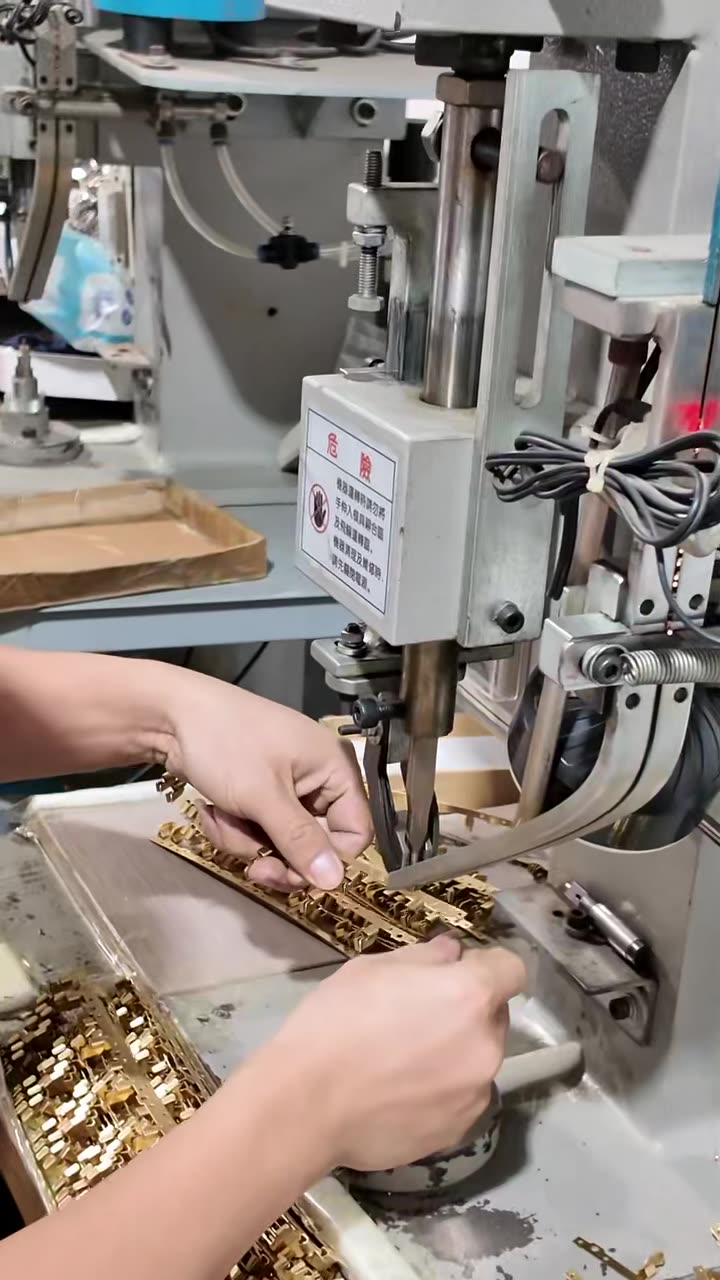
Tooling and first article — about 10 days
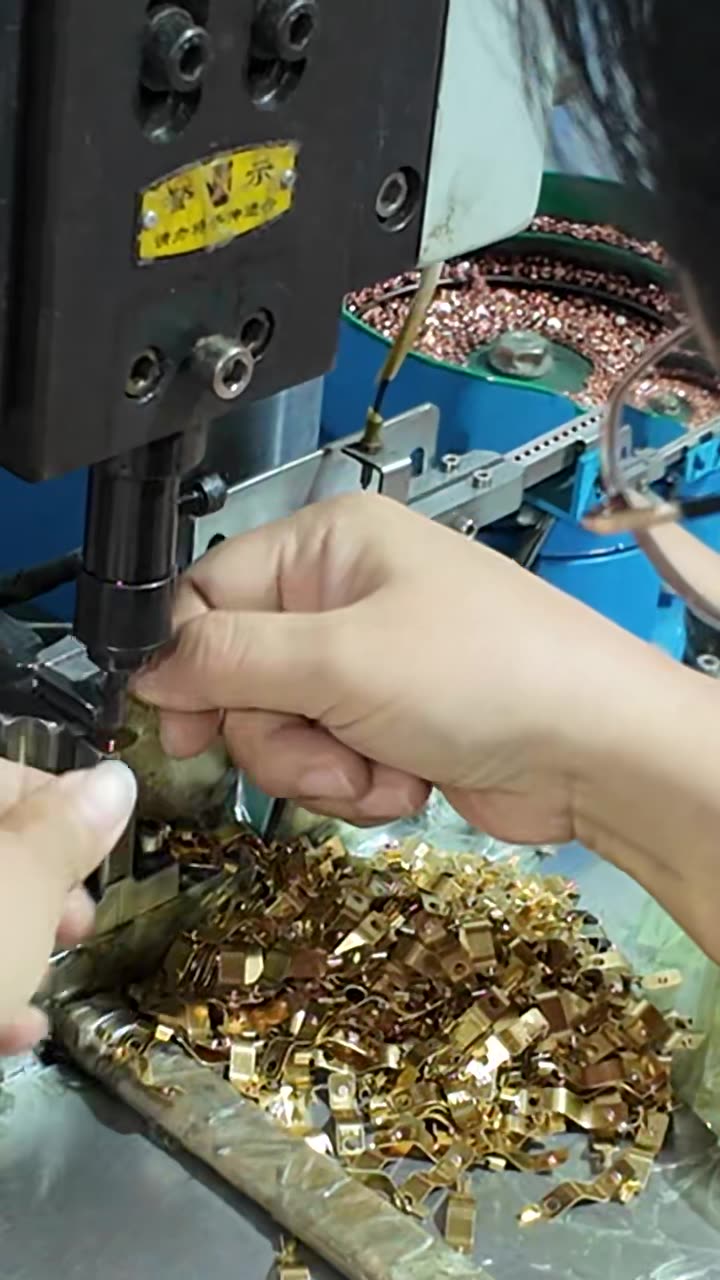
The die is designed and cut, first pieces are pressed and formed, then measured against the drawing. A sample goes to you with its material test report so you can fit it into your socket, or into your assembly, and see how it behaves.
Tooling is a real cost and we treat it as one. What you pay, who owns the die and what happens to it if the relationship ends, all get agreed in writing before anything is cut. Some projects we credit part or all of the tooling cost against the first production order; it depends on the part and the volume.
Your validation — and adjustments
Fit the sample, run it in your line, check the insertion feel, the plating, the burrs. Tell us what has to change. Minor adjustments to the die are normal at this stage and are not a negotiation — the point of a first article is to find these things before mass production, not after.
Production, inspection and shipment
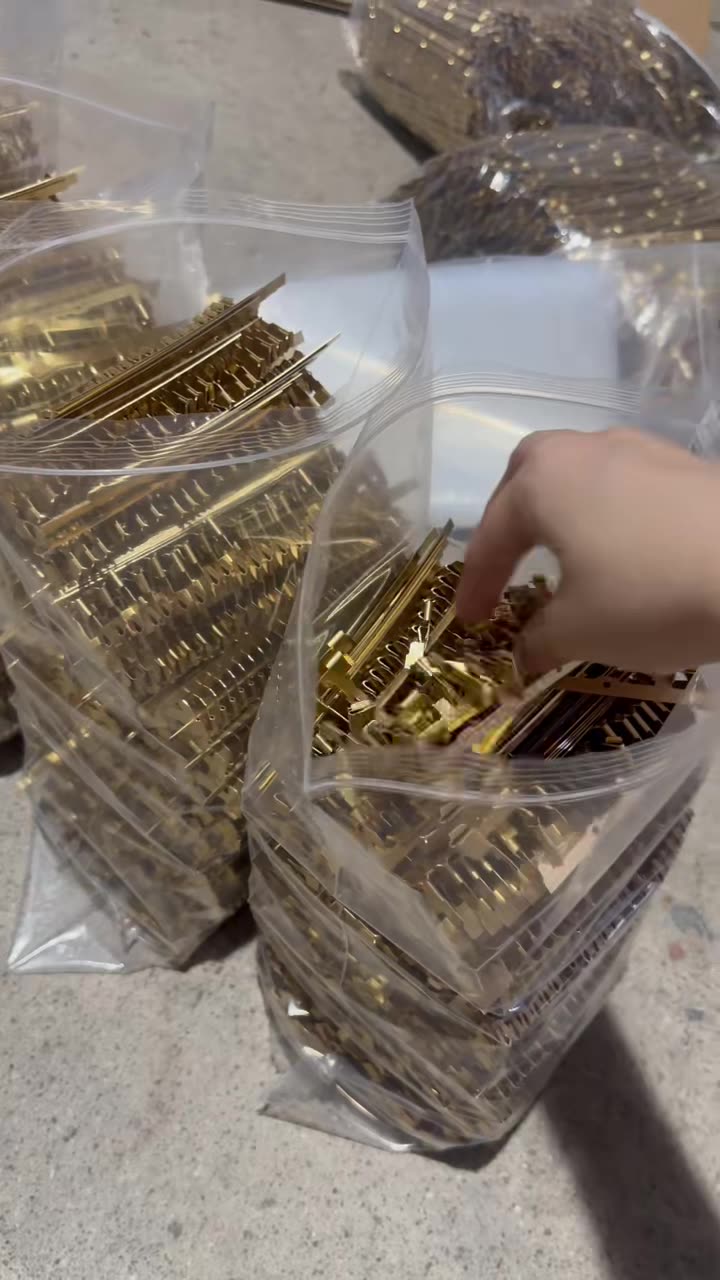
Once the sample is approved, production runs against it. In-process and final inspection, packing to your requirement, documents per batch, photographs of the packed goods, then shipping from Shenzhen or Guangzhou — LCL for trial volumes, FCL when the orders grow.
Straight answers
Four things we will not pretend about
Most buyers have been burned once. These are the four points where the conversation usually goes sideways — so here is our answer in advance.
- “Send me your price list.” — There is no fixed price list, because a stamped brass part is priced from its geometry, its material and the copper market. Anyone who sends a price list for a custom part is quoting a guess.
- “What is your MOQ?” — It is different for every part, because a die has to be cut. We will tell you the real number for your part, and where a trial quantity is possible, rather than quote a low figure and renegotiate later.
- “Can you hold this tolerance?” — Sometimes yes, sometimes it costs more than the tolerance is worth. We will say which, and suggest the tolerance the part actually needs.
- “Lock the price for the year.” — Brass follows copper. We will show you the basis and confirm the price at each order, which protects both sides when the market moves. Long-term fixed price with no adjustment is a promise that turns into a quality problem six months later.
Preparing your file
Send this and you will get a quote the same day
Essential
- Drawing or a measured sample photo
- Material, or ask for a recommendation
- Which dimensions are critical, and to what tolerance
- Trial quantity and annual volume
- Destination country
Helps a lot
- What the part does in the assembly — and what happens when it fails
- Surface finish or plating requirement
- Packing or feeding requirement from your line
- The target unit price you are working to
- A sample of the part you use today, if you are switching supplier
Switching from an existing supplier? Send a sample of the part you buy now. We will measure it, tell you what material it is actually made of, and quote to match or improve it — that comparison alone is often worth the enquiry.
FAQ
Custom part questions
Who owns the tooling?
Agreed in writing before it is cut, in most cases with the customer. What matters is that it is stated on paper, not left to an understanding — so when you ask, you get a clear answer rather than a vague one.
What if the first sample is not right?
We adjust and send another. That is what the sample stage is for. If a dimension keeps moving out of tolerance, the fix is usually in the die rather than in the inspection, and it gets fixed there.
Can you copy a part made by another supplier?
Send the sample and we will measure it, identify the material and quote. Bear in mind that if the original design is protected by someone else’s patent or registered design, that is your call to make, not ours — we manufacture what you instruct us to manufacture.
How long does mass production take after sample approval?
It depends on the order size and the material in stock, and we confirm it with the quotation so there are no surprises at the PO stage. Trial quantities move quickly; large orders are scheduled against the press.
Do you do small trial orders?
Yes, and they are a normal part of how we work rather than a favour. The point of a trial is to prove the part fits your line before anyone commits to a big order — that is better for both sides.